
January 20 update
Military developments since mid-day January 18

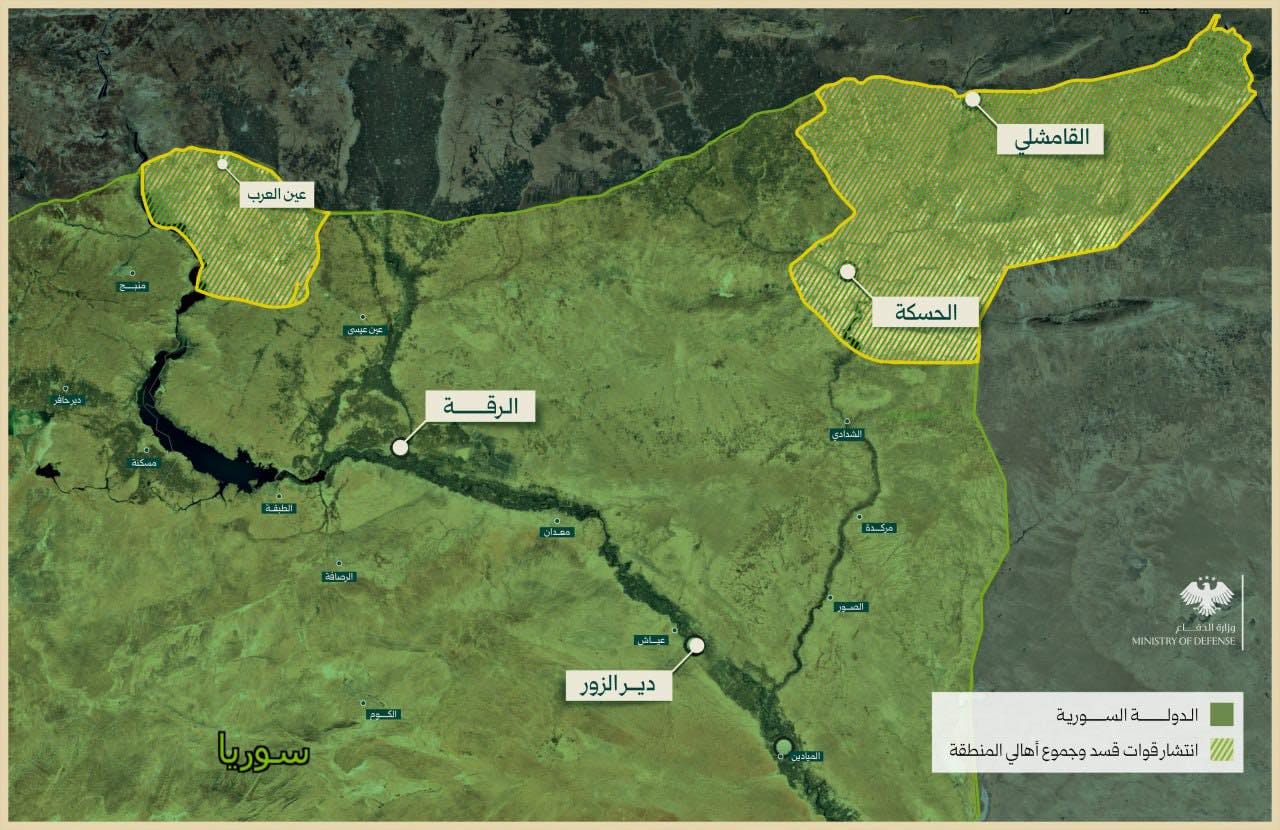
My last update, published in the afternoon of January 18th, left off with then unconfirmed news that the SDF had withdrawn from Deir ez-Zour governorate and that its control over al-Raqqah city was being contested by pro-government elements. These reports were proven true, with the government taking control of both to varying degrees by the end of the day.
These developments were followed by an agreement signed by President al-Shar‘ and virtually by SDF commander Mazloum ‘Abdi in which the former essentially conceded all the government’s demands and more regarding the integration of the SDF into the military and ending of autonomous government in northeastern Syria. While this document was supposed to establish a ceasefire this never materialized, as fighting between the two sides continued on multiple fronts. In the evening of the 19th Mazloum ‘Abdi travelled to Damascus for an in-person meeting with al-Shar‘ that resulted in the collapse of negotiations between the government and SDF, with the latter calling for full scale mobilization across the territories still under its control.
I will cover these political developments and the broader implications in detail with this week’s newsletter (which will be published on Thursday for paid subscribers). In the meantime this post will cover the major on the ground developments occurring between the afternoon of January 18th to the afternoon of today, the 20th.
Deir ez-Zour
As was alluded to in the last update early in the morning of the 18th ‘tribal insurgents’ began attacking SDF positions and seizing territory throughout east bank Deir ez-Zour. The timing and geographic scope of this insurgent activity – unprecedented in the recent history of anti-SDF tribal attacks - strongly points to this being a government orchestrated the affair. This corresponds with reports from months prior of the government’s head of tribal affairs Abu Ahmad Zakour meeting with sheikhs from across Syria’s east in preparation for an anti-SDF offensive. The role of the al-Baggarah appears particularly significant given HTS’s vital flipping of regime-affiliated Baggarah tribesmen during 2024’s Battle of Aleppo and a similar role recently played by the Baggarah in al-Sheikh Masoud. In east bank Deir ez-Zour the Baggarah dominate the western stretch of the Euphrates and its members were the core of the SDF’s local Kasrah Military Council. The tribe’s Sheikh Hajim al-Bashir was seen meeting with Qutaibah ‘Isa, Abu Ahmad Zakour’s brother, at the former’s guesthouse in Deir ez-Zour earlier today.
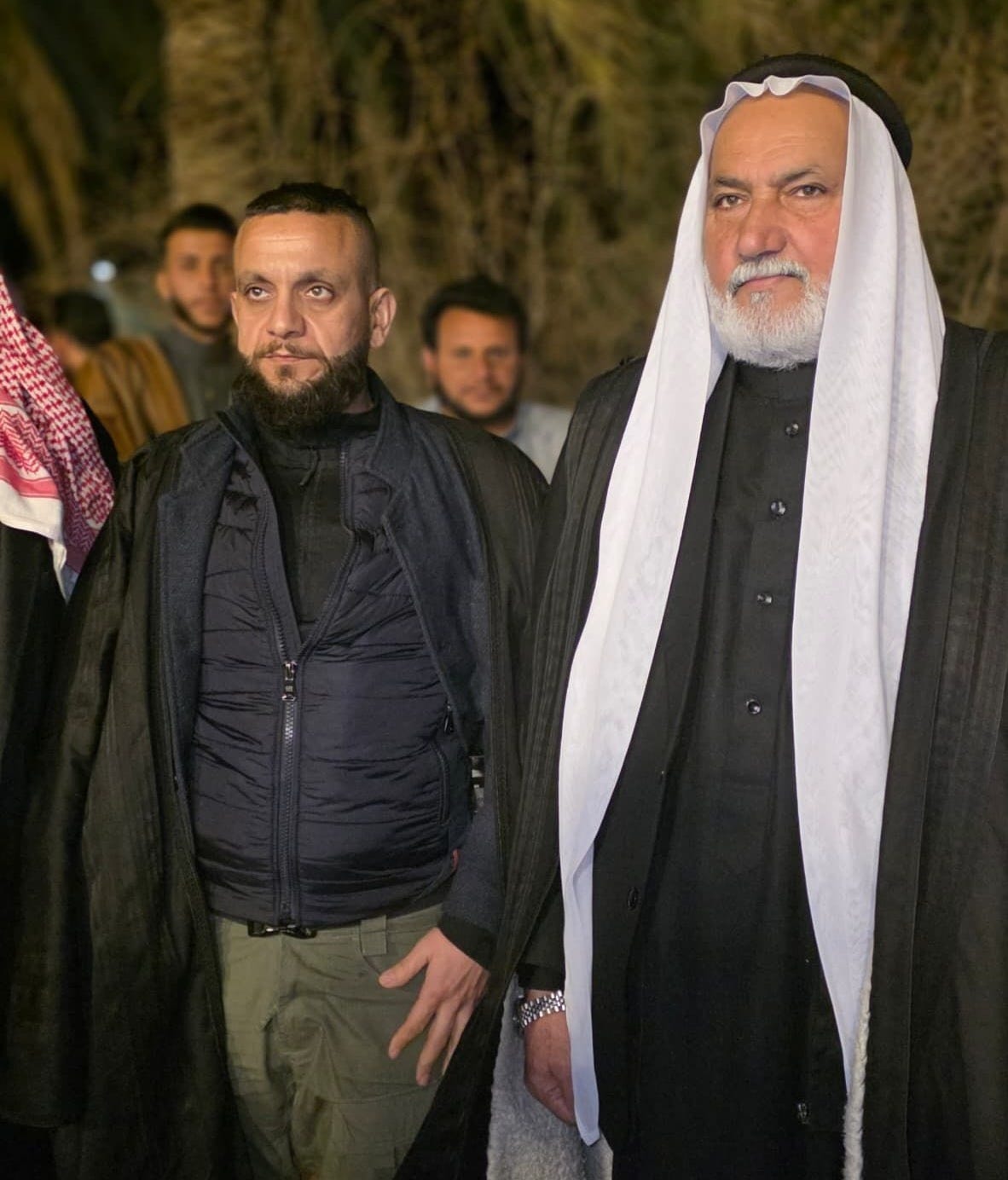
Following this coordinated assault and likely numerous defections the SDF withdrew north, vacating almost the entirety of the province. Insurgents opened the region’s prisons, likely holding thousands of anti-SDF militants and activists, and others imprisoned over suspected pro-government sentiments. Soon after the Syrian government began moving its army across the river, later followed by Ministry of Interior security forces, the Ministry of Emergency and Disaster Management, and eventually the Deir ez-Zour governor, rapidly beginning the process of integrating the east bank with the Damascus-run west bank.
With this rapid turn of events the government took control of several of Syria’s main oil and gas facilities, including the Omar, Tanak, al-‘Izbah, al-‘Atallah, and al-Jafrah oil fields and the Conoco gas field and plant (see video below), representing a large increase in government production capacity and inversely a significant decrease in SDF/DAANES revenue. While commentary has typically just focused on these other oil and gas fields exist in the northeast, including the al-Jabsah field east of al-Shaddadi, as well as the al-‘Awdah and al-Suwaydah fields further north.
al-Hasakah
With southern al-Hasakah being in many ways an extension of northern Deir ez-Zour both demographically and geographically, tribal insurgents and later the Syrian army soon advanced in the direction of al-Shaddadi, quickly taking the town of Markadah. On the 19th government forces engaged the SDF in the vicinity of the Sini prison, located several kilometers east of al-Shaddadi and holding - according to the SDF statement - “thousands” of IS militants, taking control of the facility and surrounding area by the evening. The fate of this prison as well as others dedicated to IS fighters will be discussed in a separate section below.
Elsewhere fighting broke out between the SDF and local tribal elements in the vicinity of Jabal ‘Abd al-‘Aziz, a small mountain range that begins approximately 15km west of al-Hasakah city. Government media reported that the SDF committed a massacre against the local insurgents in the area, however this was disputed by other government-aligned activists. Fighting has continued in the area, with government forces likely also arriving from the direction from Ras al-‘Ain/Sere Kaniye, part of the ‘Peace Spring’ pocket of government-controlled Syria, created by Turkey’s 2019 operation of the same name.
The long restless southern neighborhoods of al-Hasakah city, Arab-populated districts such as al-Nashwah and Ghuwairan, have also seen popular anti-SDF activity and clashes. However Ghuwairan is also home to a US military facility and the Panorama/al-Sina‘ah prison, home to the majority of detained Islamic State fighters, meaning the entrance of government forces would likely have to occur via US negotiations.
Currently government forces appear to be advancing on the town of al-Houl, located 40 km east of al-Hasakah city, home to the notorious detention camp of Islamic State-linked women and children.
[As I was writing this it seems that the Syrian Army has taken control of the camp]
al-Raqqah
The city of al-Raqqah saw popular anti-SDF protests in the morning and afternoon, coinciding with reports of clashes and killing of demonstrators and random civilians by SDF security forces. ‘Abd al-Hamid al-Mahbash, one of the local DAANES civilian leaders the head of the PYD-affiliated Future Syria Party, defected to the government side in the afternoon. The Syrian military and Ministry of Interior security forces entered later in the day, seemingly following a partial withdrawal by the SDF. However SDF cells reportedly remained active in different parts of the city through at least the night of the 19th, likely relying on the extensive tunnel system dug in recent years underneath the city. Additionally SDF forces barricaded themselves on the grounds of the recently constructed al-Aqtan prison for IS detainees, located to the northeast of the city, so far successfully thwarting the government’s attempt to take over the facility.
Government forces later spread through most the al-Raqqah countryside, taking the town of ‘Ain ‘Isa, both linking its forces from the ‘Peace Spring’ town of Tell Abyad, and severing the link between SDF-controlled Kobani and al-Hasakah along the M4 highway. Since then fighting has been reported on the Abyad road, running from al-Raqqah eastward towards al-Hasakah city.
Aleppo
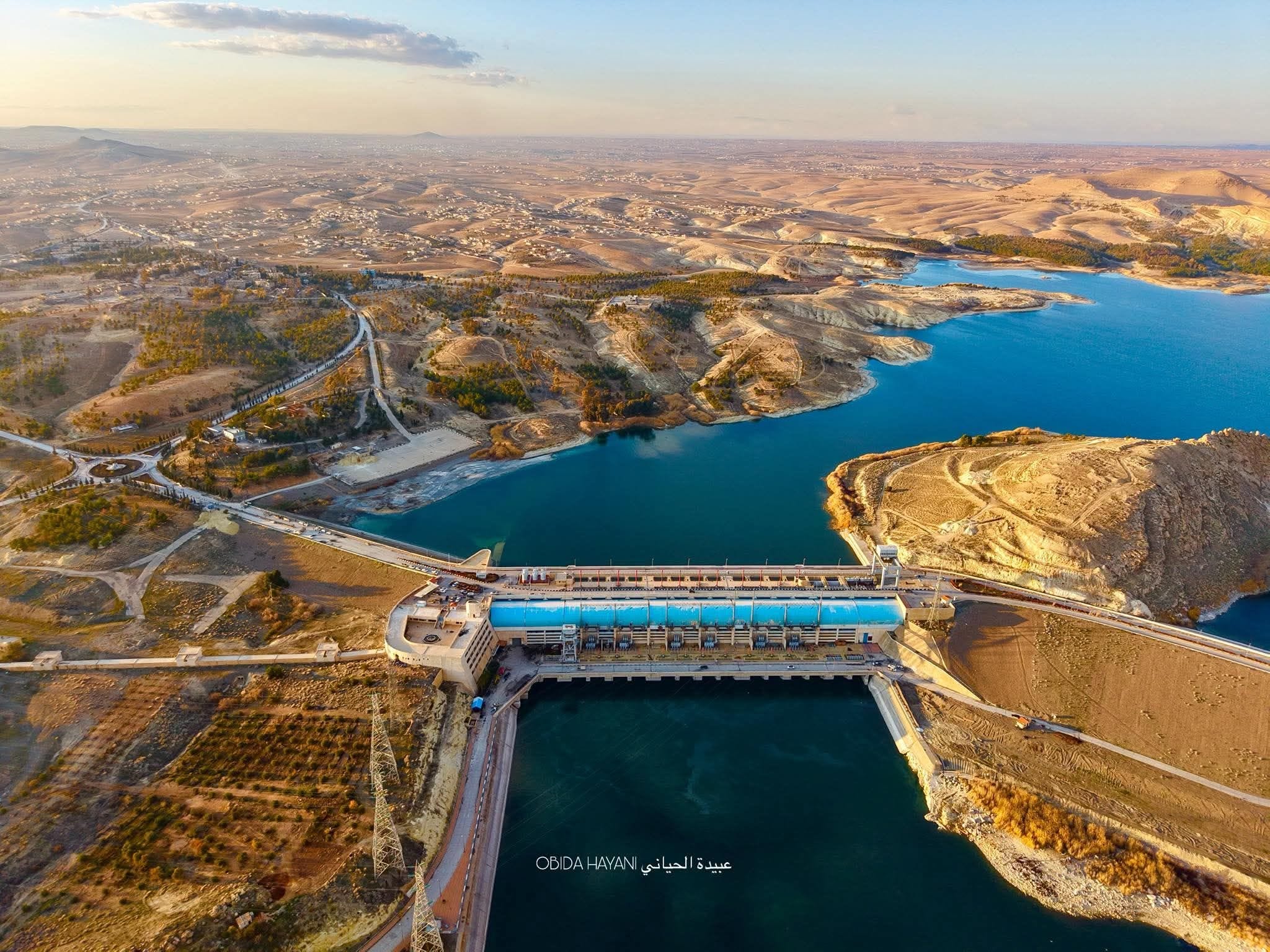
Following an intensification of clashes in the previous day or so, the SDF withdrew from the Tishrin dam on the morning of the 19th. The Syrian army quickly moved in to seize the hydro electric facility. Since then clashes have been occurring in the vicinity of Sarrin, located in the Arab-populated countryside south of the Kurdish-majority Kobani area.
Islamic State detainees
Since the capture of the Islamic State’s last piece of controlled territory in early 2019, the SDF/DAANES has maintained a number of prisons holding approximately 9,000 detained Islamic State fighters. These include Panorama/al-Sina‘ah in al-Hasakah city, al-Aqtan outside al-Raqqah, and the Derik/al-Malikiyah Central Prison, and the Sini or Kum prison outside al-Shaddadi (see in order below). I’ve been told several other smaller facilities located in rural al-Hasakah have also held IS fighters in the past, though its unclear if they currently do.


The first of these facilities to come under threat of the government advance was al-Aqtan in al-Raqqah. As mentioned above, an SDF contingent – led by senior cadre and Iranian national Enkil Cebel - has holed up on the prison grounds and so far has successfully defended them from government assaults. The rationale behind this decision can be explained by several factors including: the SDF not wanting to hand over the prison to government forces due to the anti-IS file being the primary card it has to play to ensure its survival, suspicions that government forces will release former IS fighters, and the facility – built in 2024 – being located at a defensible high point.
In the afternoon of the 19th the SDF reported that it was no longer in control of the Sini prison of al-Shaddadi, with government forces having taken it over. This change in hands coincided with the escape of an untold number of prisoners, with both sides accusing each other of being responsible. The SDF published two videos allegedly showing government forces opening cells within the prison and interacting* with escaped fighters on the roadside nearby. Later in the evening the government’s Ministry of Interior reported that its forces had arrest 81 of the 120 IS members who escaped from the prison. Additional videos from southern al-Hasakah city reported to show the arrest of a dozen or so escapees by the SDF.
According to a contact I spoke to who visited the prison today, the prison only held 120 detainees in total and the video shared by the SDF allegedly showing government fighters breaking out prisoners was not filmed in Sini prison.
With its location at the southern entrance to al-Hasakah city, in close proximity to restless Arab neighborhoods, SDF control of Panorama/al-Sina‘ah prison is vulnerable. This afternoon local media reported that SDF forces in the vicinity of the prison were engaging insurgents. The Syrian military is likely not far away as well.
Reported abuses
Numerous allegations of war crimes have been lodged at both government forces and the SDF, though these all still require further verification. A number of videos seeming to show government forces carrying out field executions or the aftermath of such have circulated on social media, along with another highlighted by the SDF showing government fighters mocking the corpses of dead SDF fighters, one with her throat cut. Other videos showing the abuse of detained SDF fighters by members of the Syrian military have also circulated.
With regards to the SDF there are the accusations regarding the killing of civilian demonstrators in al-Raqqah city and the supposed killings in Jabal ‘Abd al-‘Aziz. Other videos published by pro-government accounts showing the corpses of execution victims with their hands restrained on the side of the road, as well the abusing of detainees accused of attempted defection or insurgent activity.
Conclusion
With the failure and reported end of talks between the government and SDF things are currently heading in a very dangerous direction. The SDF and much of the Kurdish population residing in the Kobani and Hasakah areas have increasingly come to see the conflict as existential, with arms being passed out to thousands of mobilized civilians, with rhetoric highlighting the upcoming battles as a fight to the death. Meanwhile abuses committed by pro-government forces appear to be increasing as fighting goes on, which is a very worrying sign given the previous massacres committed by government military and security forces and civilian supporters against minority communities on the coast in March and in al-Suwayda’ in July. So far the fighting in the northeast has not yet directly reached the Kurdish populated regions of Kobani and northern al-Hasakah (see map below with Kurdish towns and villages marked in yellow), but all previous efforts at deconfliction have proven futile.

