
On the current military developments
Gov't takes all of west bank al-Raqqah, enters Deir ez-Zour following SDF withdrawal
With the situation today rapidly evolving I’ve decided to write an early recap of the events that have occurred in eastern Aleppo and along the Euphrates since January 14th. With the situation liable to change significantly and rapidly in the coming hours keep in mind that this was published at 3pm.
In the immediate aftermath of its successful capture of the al-Sheikh Maqsoud enclave from SDF-aligned Asayish forces by January 11th, the Syrian government started deploying reinforcements to the Deir Hafir front of eastern Aleppo. After declaring the Deir Hafir and Maskanah subdistricts ‘military zones’ the Ministry of Defense announced the opening of a humanitarian corridor from 9am to 5pm on January 15th and 16th, for civilians to flee SDF-controlled areas along the Aleppo/al-Tabqah road via the Deir Hafir crossing. In response - though citing ‘serious security developments’ and the government’s closure of crossings, Asayish closed all crossings between its territory and government areas, effectively blocking this corridor. The government later accused the SDF of obstructing civilians trying to flee, to which the SDF and responded with accusations of the government forcibly displacing the population.
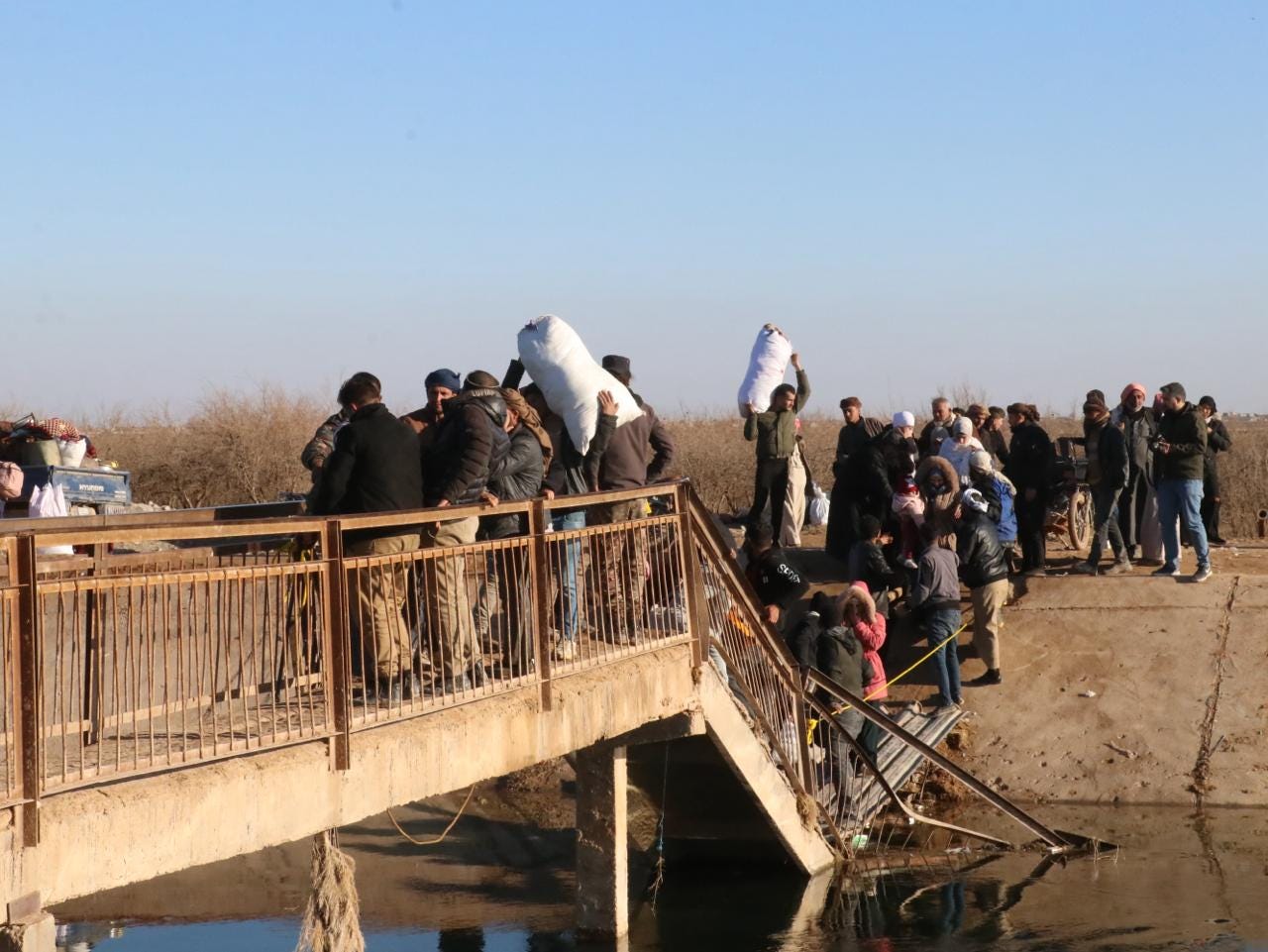
Over the course of the 15th and 16th tens of thousands of local civilians fled Deir Hafir westward via various foot bridges running over the areas many irrigation canals. Concurrently clashes largely consisting of artillery bombardment and suicide drone attacks took place across these front lines between the Syrian army and the SDF. According to the SDF Turkish drones carried out targeted strikes against its forces in the area as well.
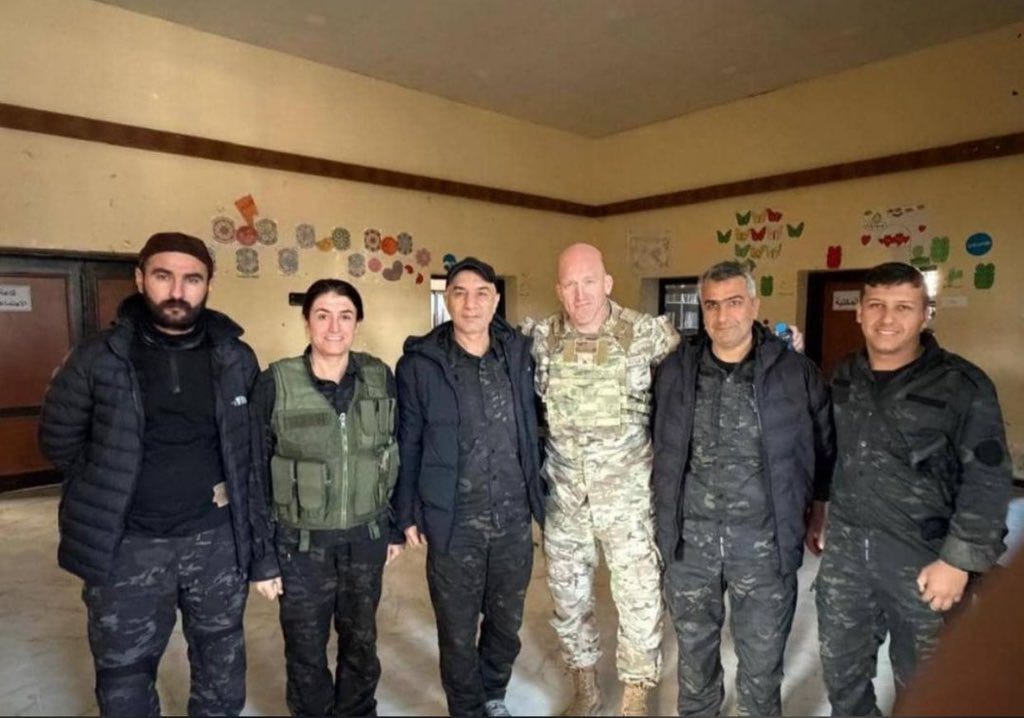
In the afternoon of January 16th, a US military delegation traveled across the Euphrates to Deir Hafir to attend a brief meeting with various senior SDF commanders, reportedly including Rohlat Afrin, Çiya Kobani, Cemil Kobani, and local Deir Hafir commander Serxwebun Kobani. According to NPA the visit was intended to “to reduce the escalation… [and] inspect the effects of the destruction and the sites that were bombed,” though likely was related to the reported US efforts in pressuring the SDF to vacate areas west of the Euphrates “to avert further confrontation with Damascus and as a confidence-building measure toward resuming integration talks.”
Several hours later SDF commander Mazloum ‘Abdi announced via social media that
Based on calls from friendly countries and mediators, and our expression of good faith in completing the merger process and our commitment to implementing the provisions of the March 10th agreement, we have decided to withdraw our forces tomorrow morning at 7 a.m. from the current line of contact areas east of Aleppo, which have been subjected to attacks for two days, and that toward repositioning in areas east of the Euphrates.
The withdrawal was welcomed by the government, with the military’s Operation Authority stated that the SDF would not be targeted during the process. This commenced on the morning of the 17th, with the SDF pulling its forces back in the direction of al-Tabqah. This was rapidly followed by the entrance of the Syrian army into Deir Hafir and Maskanah, with Internal Security forces arriving into the towns soon after. However what had been a peaceful process was interrupted at approximately 12:30 when clashes broke out between the advancing government troops and the SDF around the town of Dibsi ‘Afnan, located just inside the al-Raqqah provincial boundary at a key bridge linking Maskanah and al-Tabqah.
Below: footage reportedly showing the clashes
regarding the incident the government said:
SDF forces violated the agreement and targeted a Syrian Arab Army patrol near the city of Maskanah, killing two soldiers and wounding others
while the SDF stated:
The agreement stipulated a ceasefire and a 48-hour deadline for our forces to withdraw from the towns of Deir Hafer and Maskana. However, the Damascus government deployed military convoys, heavy weapons, and tanks to the area before the withdrawal was complete and attacked our fighters, resulting in the martyrdom of several of them.
With the breakdown in any sort of negotiated handover of territory, the government initiated an offensive targeting all SDF-controlled territory on the west bank of the Euphrates. This strip of territory stretch from the aforementioned western border of al-Raqqah province 115km downriver to the town of Ghanim ‘Ali near the Deir ez-Zour border, encompassing the town of al-Tabqah, the al-Tabqah military air base, at least two oil fields, and two dams along the Euphrates.
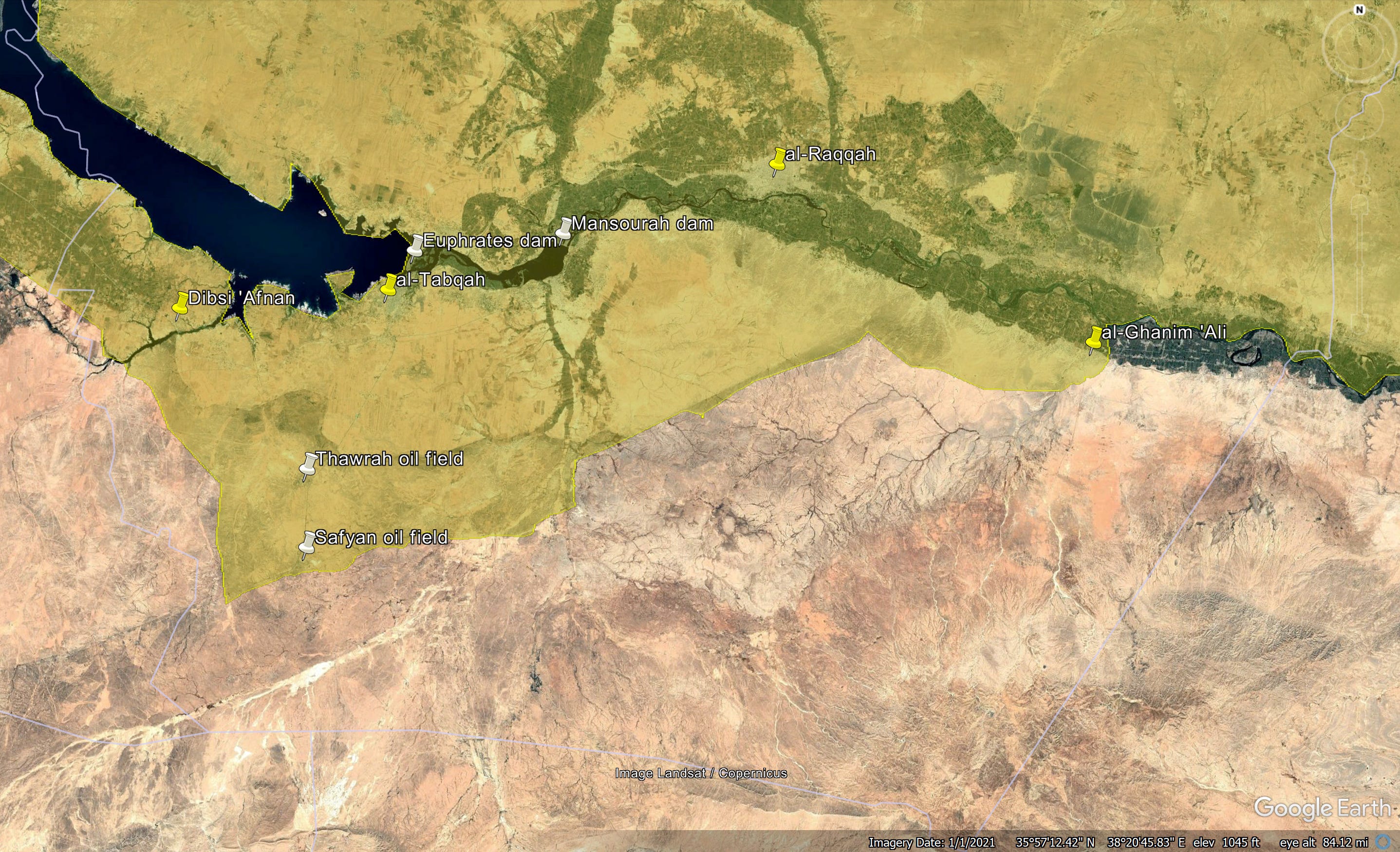
The fighting carried on through the night with the Syrian army gaining control of the entire west bank by morning, bringing them to the very edge of al-Raqqah city. Pro-government accounts have reported of some sort of massacre carried out by the SDF in one of the prisons in al-Tabqah, however this has yet to be sufficient corroborated by available evidence. In response to this advance the SDF blew up the two bridges linking al-Raqqah to the west bank as a defensive measure (leaving just the dam bridges further upriver).


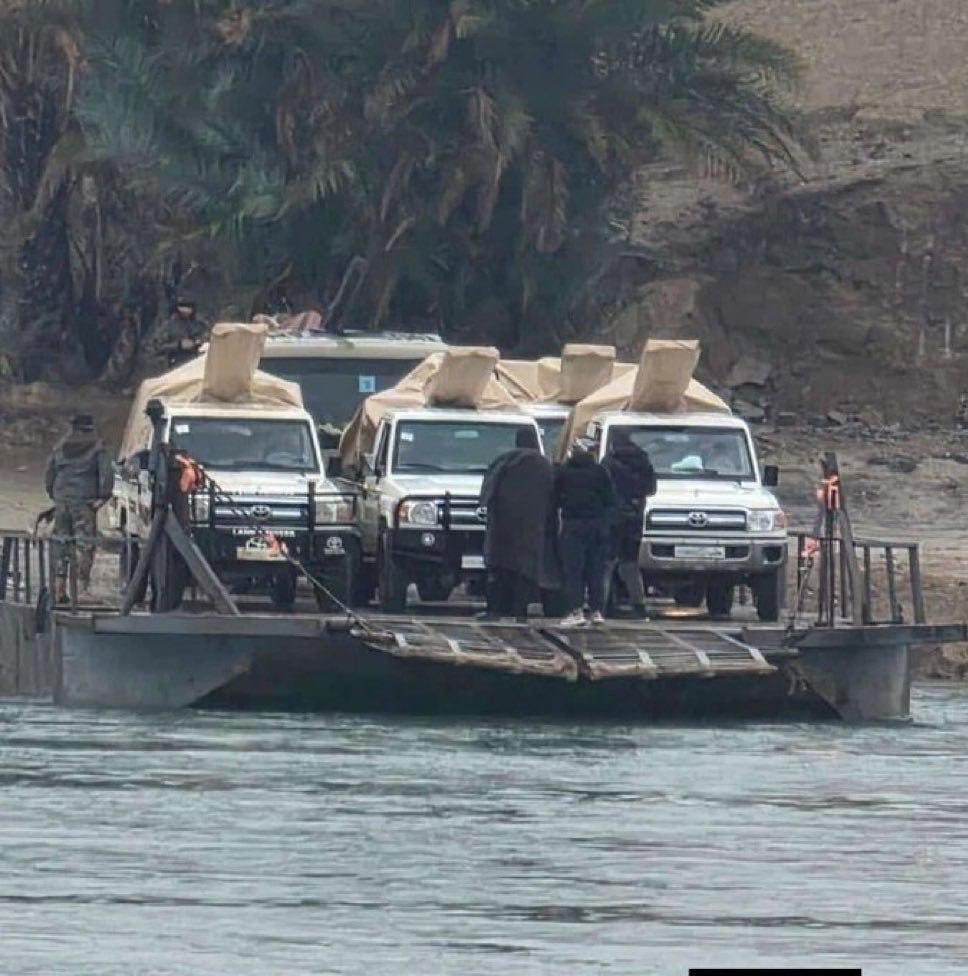
Today, this successful offensive has been quickly overshadowed by news coming from further east in Deir ez-Zour, where pro-government ‘tribal insurgents’ started taking over what had been SDF-controlled towns and oil fields on the east bank of the Euphrates. By noon it became apparent that the SDF had withdrawn from most if not all of the province, with scenes of detainees being freed from SDF prisons circulating on social media. This was quickly followed units of the Syrian army crossing the river and establishing control over a currently unclear portion of the province.
The term ‘tribal insurgents’ is a vague one, used to describe local Deiri anti-SDF forces that on and off fought the SDF since the uprising in 2023. Their role in SDF Deir ez-Zour today likely came about through significant government coordination, likely via head of the Clan and Tribe Office Abu Ahmad Zakour, though more details are sure to come out in the near future.
Going forward the most pressing questions relating to the military situation is how far and how fast the Syrian government is going to push, and where the SDF will choose to make defensive stands, in the particular with a potential battle for al-Raqqah city looming.
Bigger picture the events of the last few days point to multiple failures on the part of the SDF, namely establishing lasting legitimacy amongst many of its Arab components and adjusting to the post-December 8th landscape.

Other key events related to the military developments of this hectic several day period have been Decree 13 signed by President al-Shar‘ regarding Kurdish rights in Syria and Mazloum ‘Abdi’s meeting in Erbil with US Envoy Tom Barrack and KRI President Nechirvan Barzani, while as I write this ‘Abdi is reportedly heading to Damascus to enter a new round of talks with President al-Shar‘. These will be covered in detail in the upcoming newsletter.
Such a good write up, very thankful for your work!
Thanks for trying to cut through the crap Alex. I've read a couple of writeups on substack and all far more partisan in tone. Your approach is appreciated