
The ongoing sign controversy
A look into the institutional banners and signs installed since the January 29th agreement
Today, for the third time in 24 hours, activists in al-Hasakah city have torn down a signed placed by government officials at the al-Hasakah Palace of Justice, the main Ministry of Justice building in the province. The controversy revolves around both the role of Kurdish in ‘new Syria’ and the ongoing integration efforts between Damascus and the SDF/DAANES. This follows the appearance since early February of bilingual Arabic/Kurdish signs on several directorate buildings in al-Hasakah and Kobani, and the several week long ongoing dispute over the merging of DAANES’s judicial body, the Social Justice Council (Encûmena Edaleta Civakî/مجلس العدالة الإجتماعية), into the Syrian government’s Ministry of Justice.
I’ve gone back and taken a look at the different signage to appear since the start of the SDF integration process, hoping to gain some clarity on the issue.
Aleppo Governorate - signs installed post-January 29th
At the beginning of March, a bilingual banner was put up on the Asayish headquarters just south of Kobani which had recently begun to house a small deployment of the government’s Internal Security Forces. This later appeared in an official Aleppo (Governorate) Media Directorate post featuring the district’s government-appointed security Majd al-Din al-Sheikh.
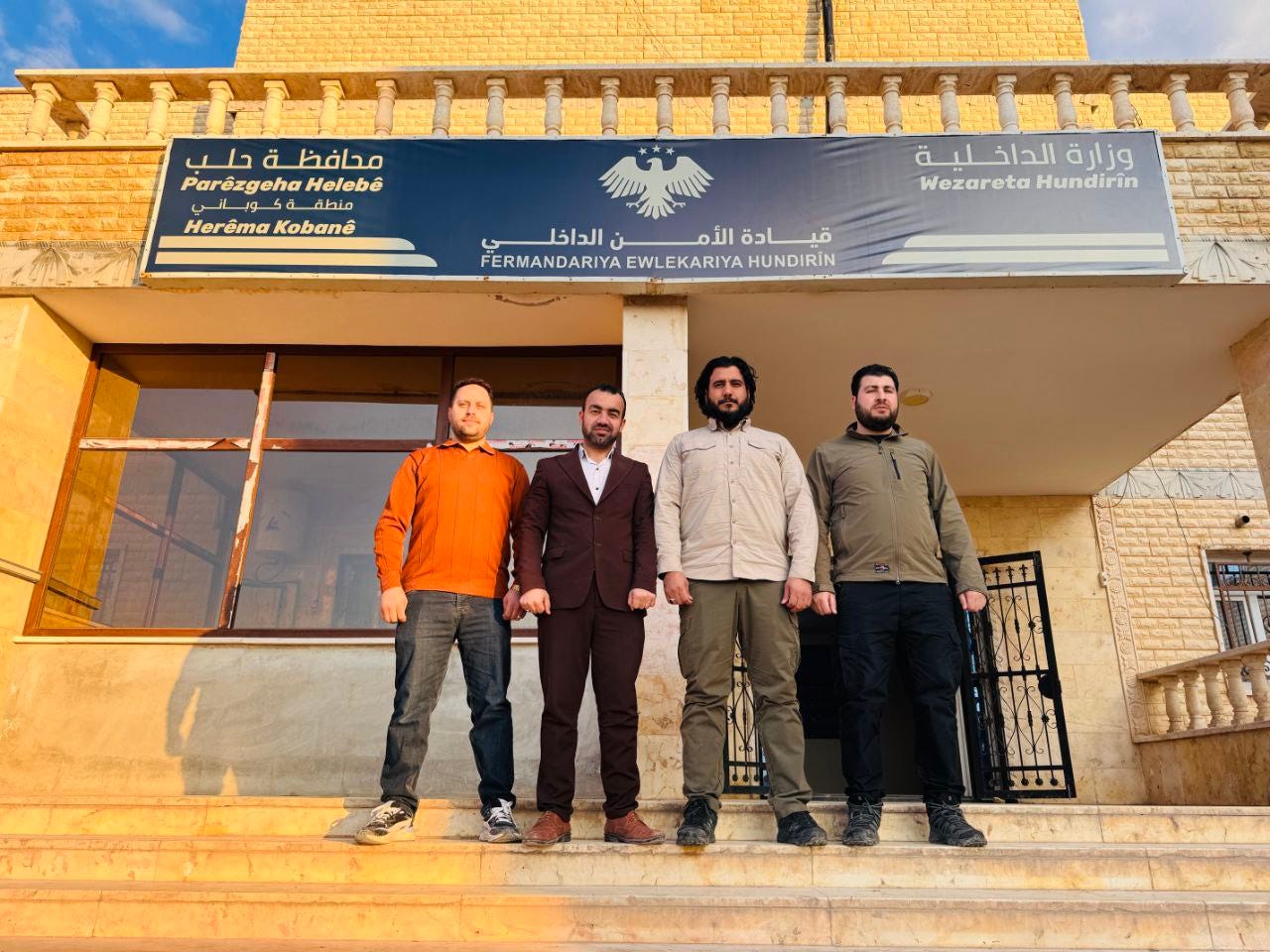
Notably this banner identified the building as Internal Security Command headquarters for the Kobani District (Herêma Kobanê/منطقة كوباني), the second-level administrative division officially referred to by the Syrian government as ‘Ain al-‘Arab. The government’s official media channel for the district publishes in both Arabic and Kurdish and has occasionally referred to the region as ‘Ain al-‘Arab/Kobani, though primarily uses the area’s official Arabic language name.
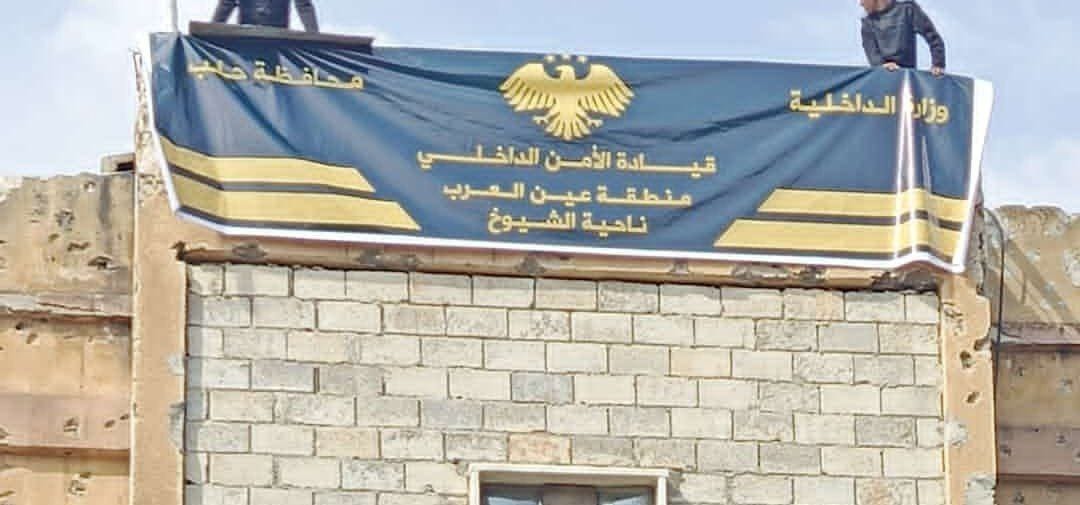
Also in mid-March photos were published showing a new banner for the Internal Security Command of the al-Shuyoukh subdistrict. Unsurprisingly for the almost entirely Arab third-level administrative district controlled by Damascus, this was only in Arabic and referred to its district as just ‘Ain al-‘Arab.
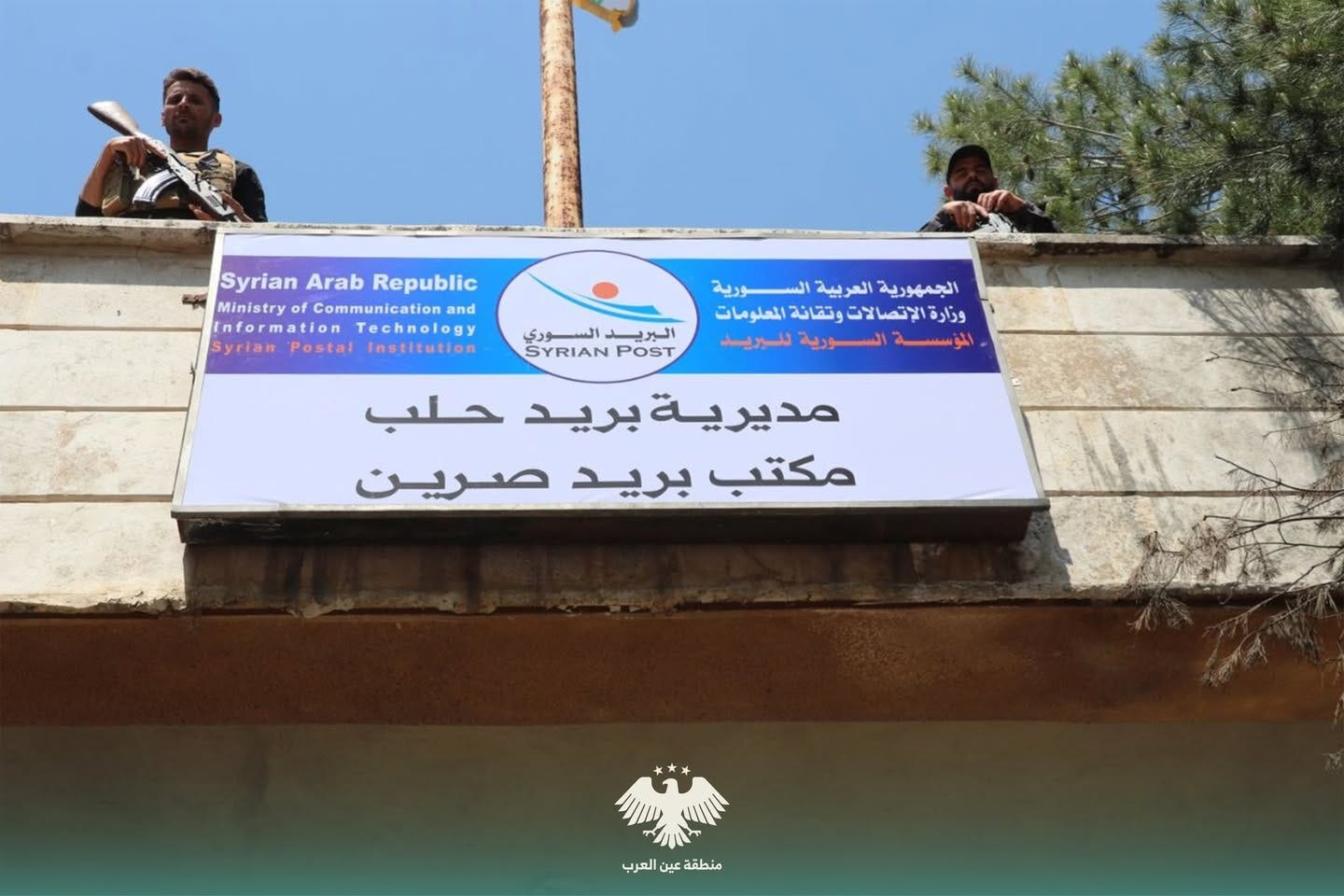
The sign installed in late April on post office of the similarly mostly Arab and totally government-controlled Sarrin subdistrict features Arabic and English.
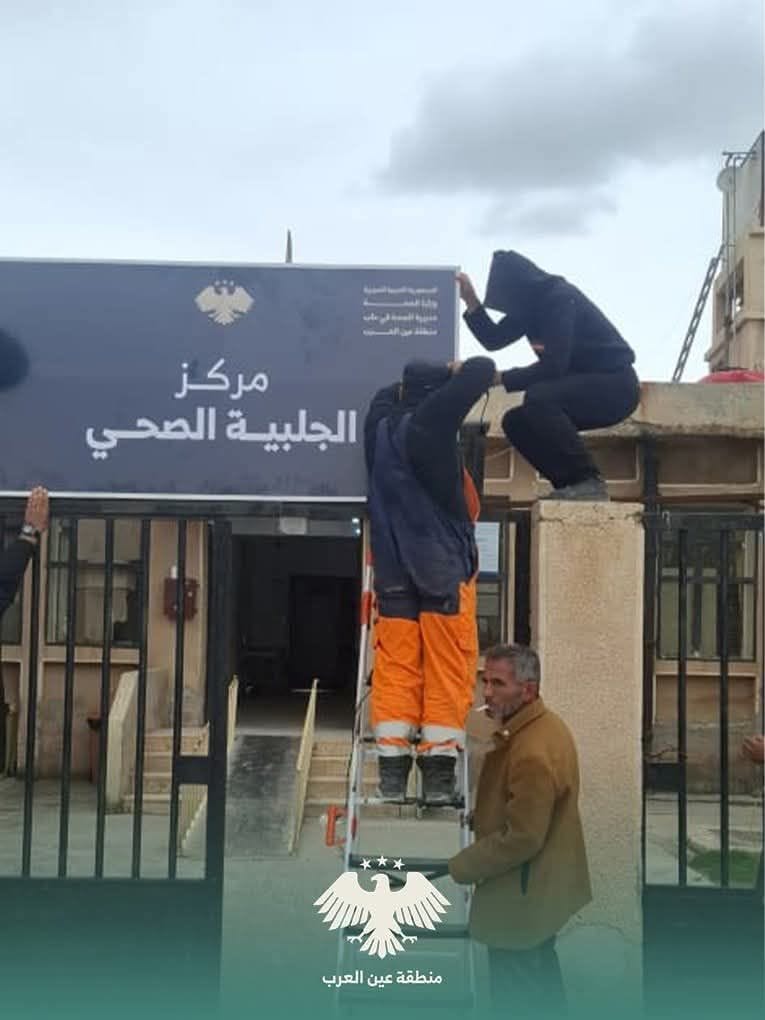
On May 4th social media pages local to Çelebî/al-Jalabiyah, a subdistrict of Kobani/‘Ain al-‘Arab, angrily shared a photo bearing the official logo of the ‘Ain al-‘Arab District account showing an Arabic-only sign being installed on the subdistrict’s Health Center.
Two days later the official District page published a series of images showing new bilinguals signs installed in front of the subdistrict’s administrative seat and the Health Center. The new signs refer to the district as ‘Ain al-‘Arab (Kobani).
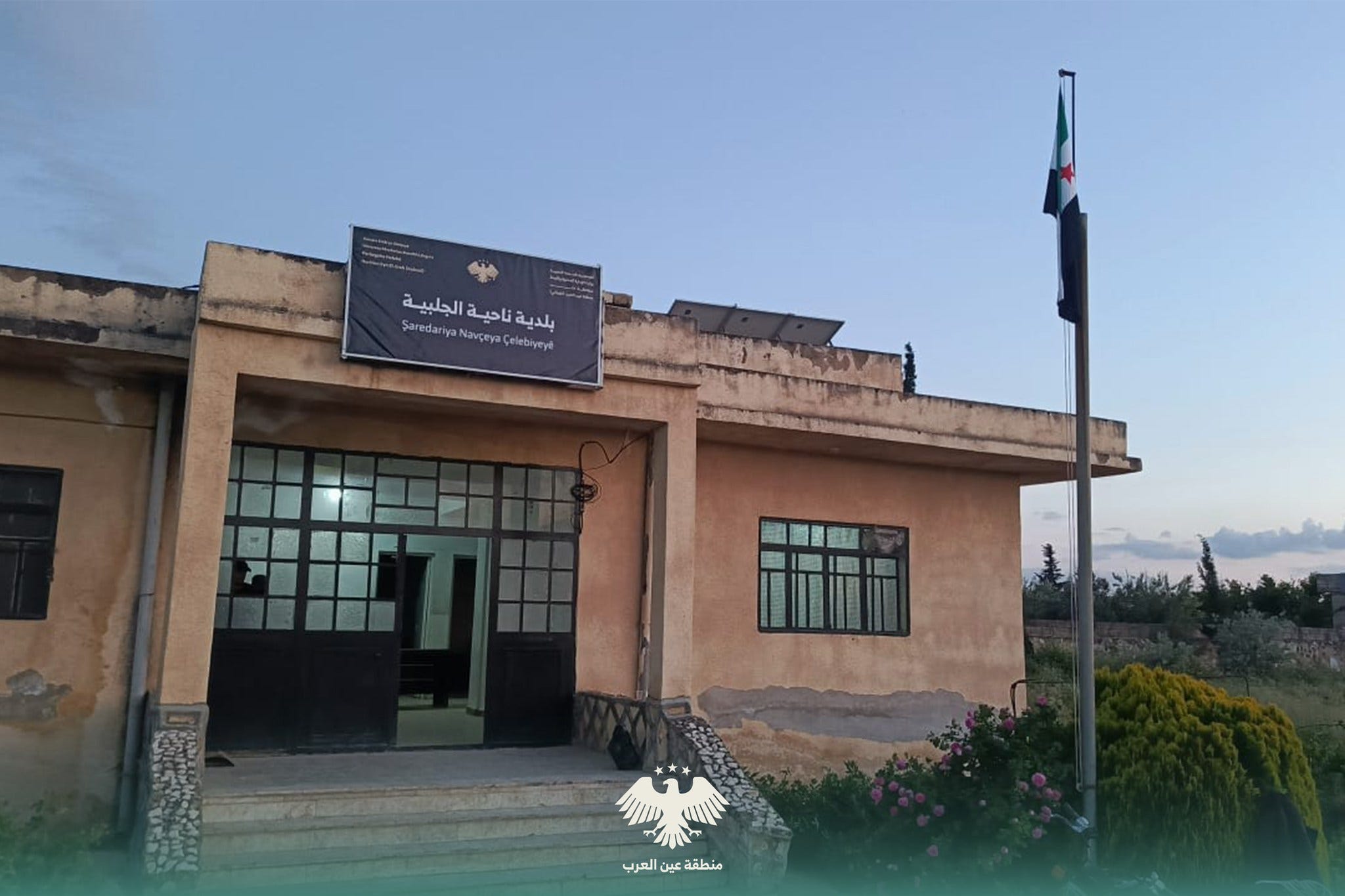
Meanwhile I don’t see the image of the monolingual sign on the page, likely meaning it was subsequently deleted.
al-Hasakah Governorate - signs installed post-January 29th
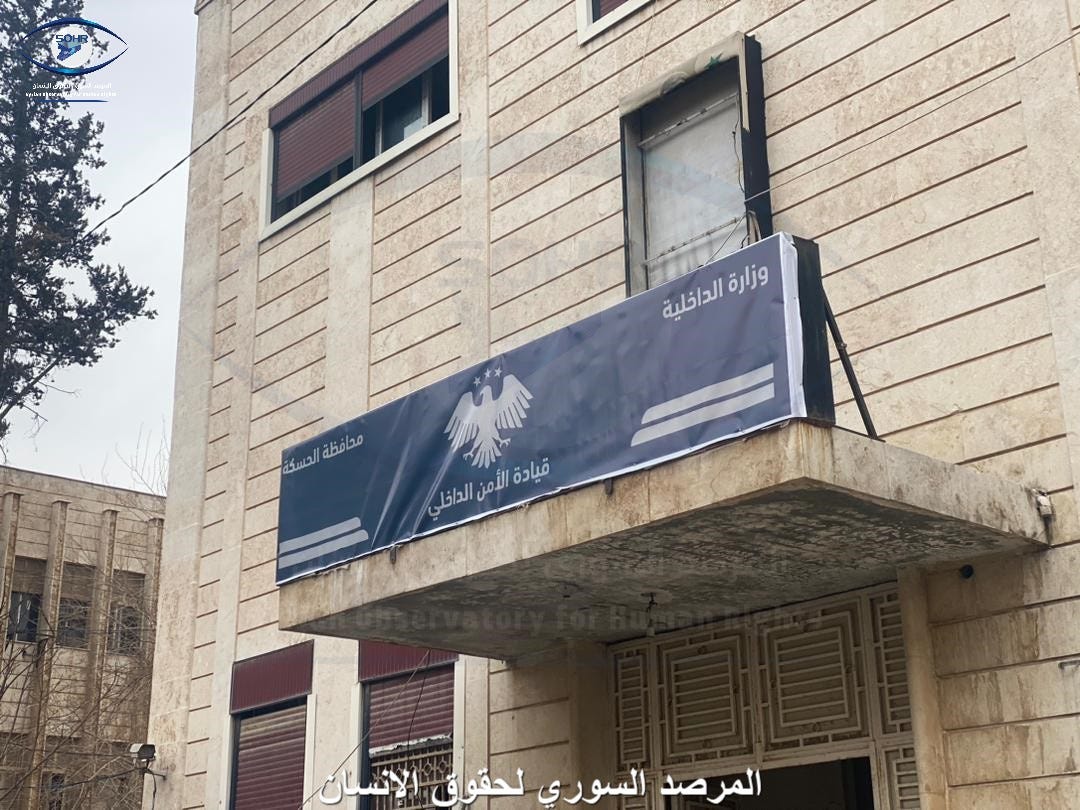
On February 7th photos were published online showing a new Arabic-only banner for the government’s al-Hasakah Governorate Internal Security Command. This same banner was removed that night with pro-government channels blaming ‘SDF elements’ for tearing it down and pro-SDF ones claiming it was removed due to violating the integration agreement and was to be replaced with a bilingual sign.
This sign was located at the rear end of the Governorate Building of al-Hasakah city (Directorate of Technical Services visible in the background). The building, which feature’s Governor Nour al-Din Ahmad’s offices, appears to have temporarily housed the government’s Internal Security Forces following their initial takeover of the Asayish’s Traffic Police headquarters.
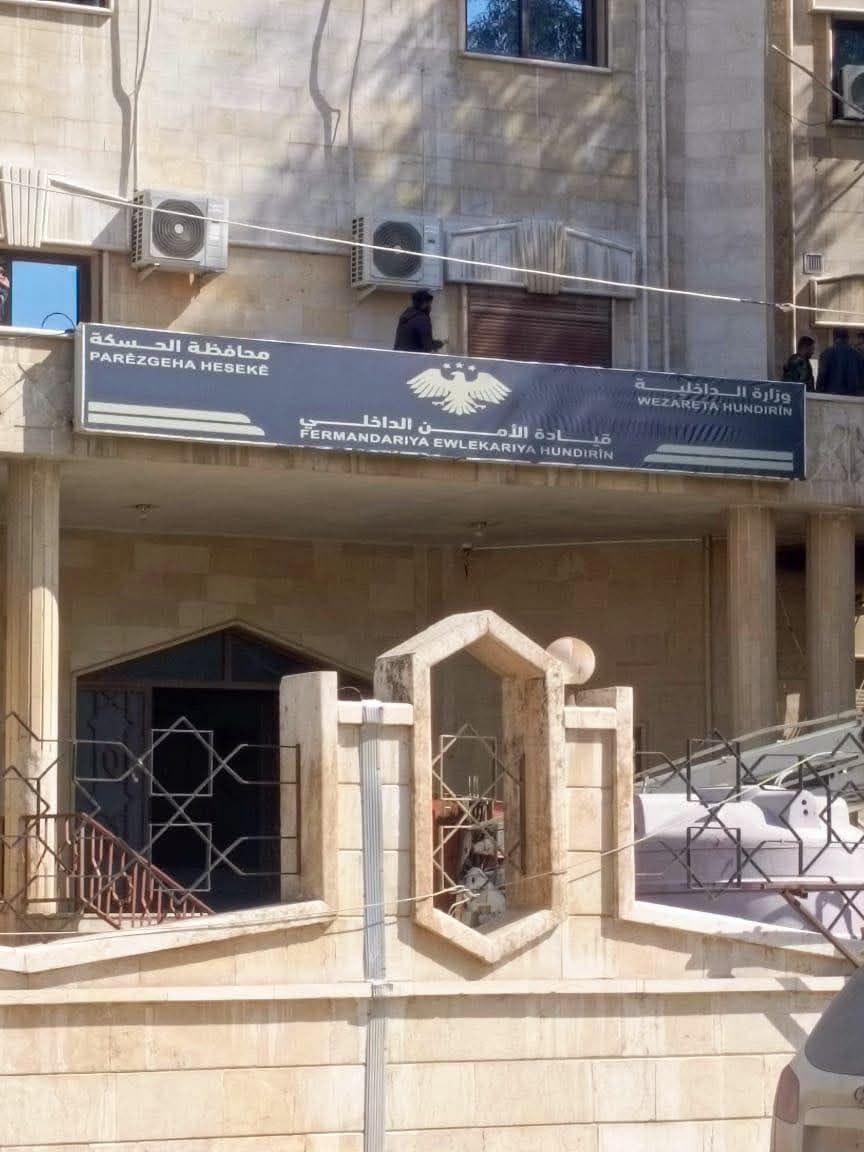
As far as I can tell a new ISC banner in al-Hasakah city did not emerge until March 9th, this time a bilingual one featuring a similar aesthetic, located on the facade of the former Criminal Security Branch headquarters.
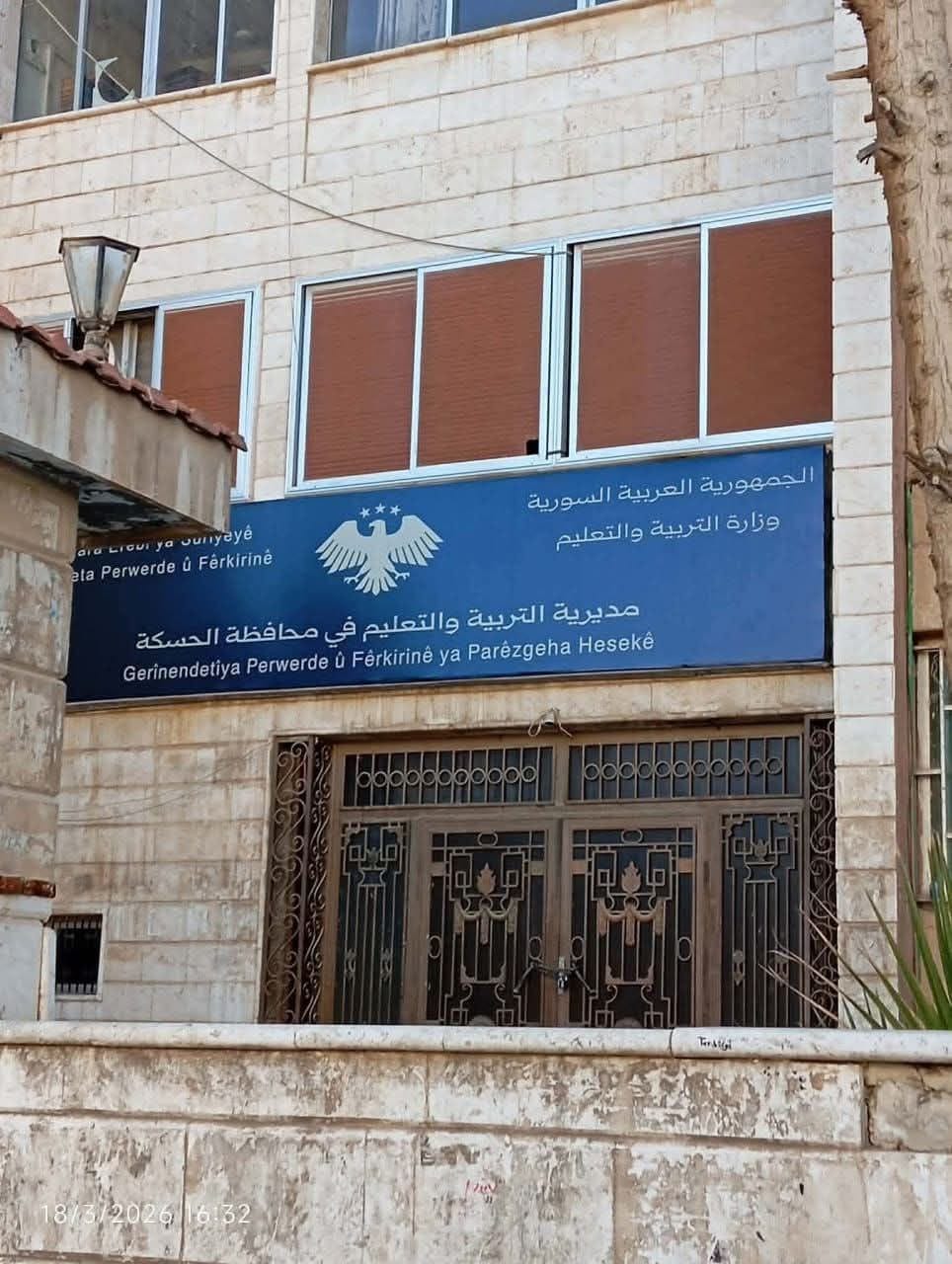
A bilingual banner was put up on the al-Hasakah Governorate Directorate of Education building on March 13th and torn down later that day.
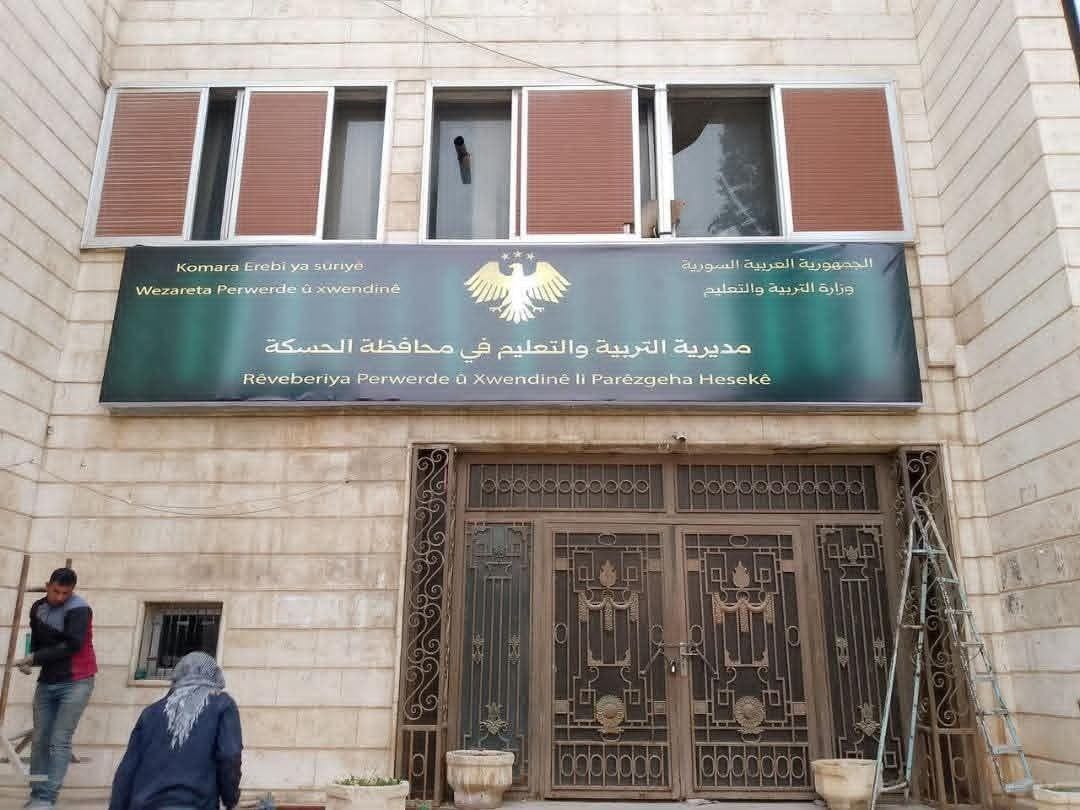
Pro-government channels blamed the Revolutionary Youth Movement (Tevgera Ciwanên Şoreşger/حركة الشبيبة الثورية) for tearing it down on the grounds that it featured the phrase “Syrian Arab Republic,” while those on the SDF side claimed it was taken down due to spelling errors in the Kurdish phrases. Five days later a new banner was put up in the same location, this one featuring changes in the Kurdish and aesthetic alterations. Two weeks later the al-Hasakah Media Directorate used the image of the initial banner in a post. Meanwhile the provincial Directorate of Education Facebook page uses the most recent bilingual banner as its cover photo.
On April 19th DAANES officials installed a new sign on the facade of the al-Hasakah courthouse, reading in Arabic and Kurdish, reading “The Court of Social Justice in al-Hasakah.” This came on the same day as a visit to the courthouse by the Syrian Attorney General to oversee the government’s planned takeover of the building.
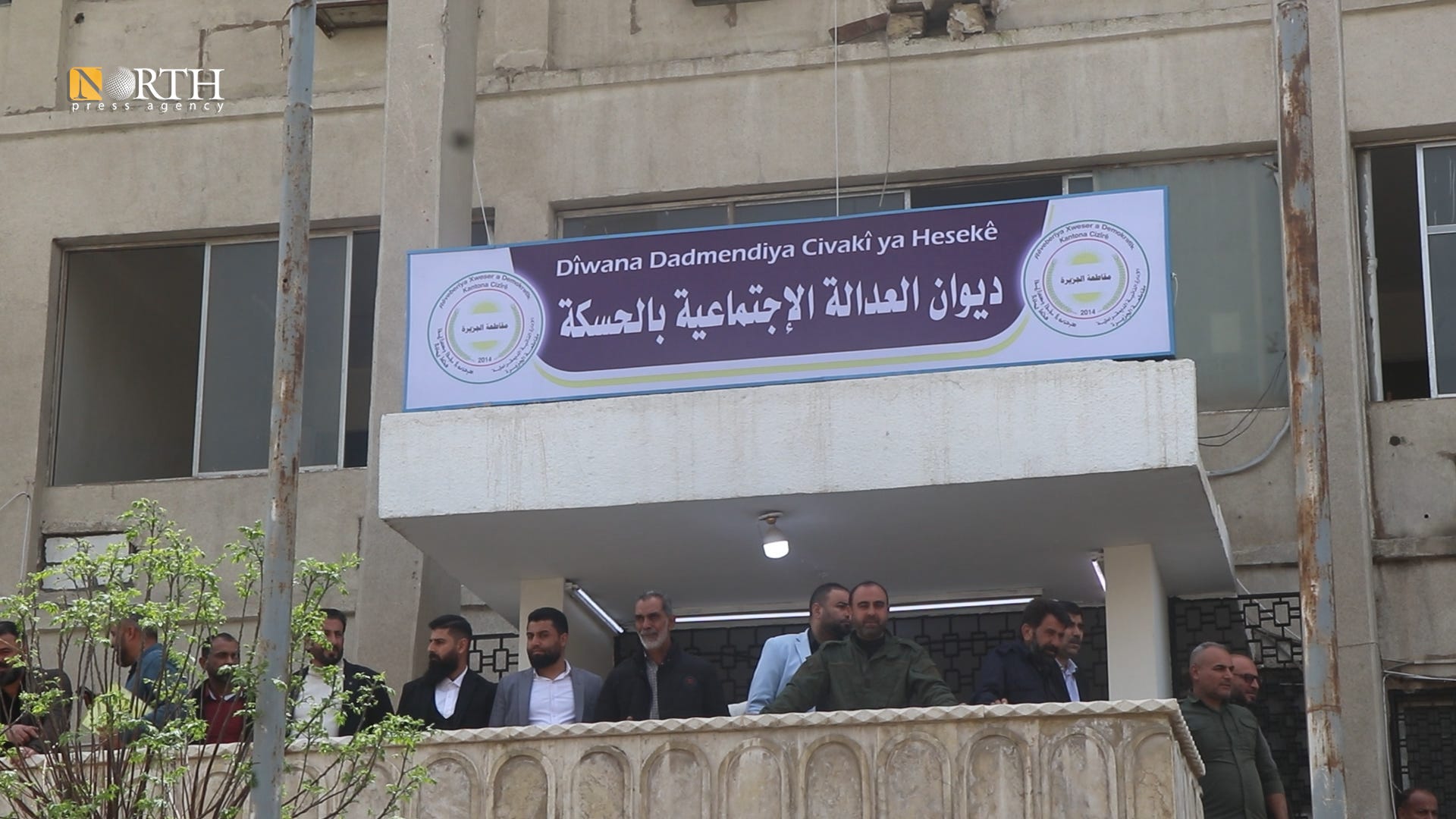
The SDF/Asayish took control of the courthouse on the morning of December 8th, 2024, following the evaporation of the Asad regime. At some point after that the former regime sign was taken down though I’m not sure whether something had been put in its place prior to April 19th, 2026.
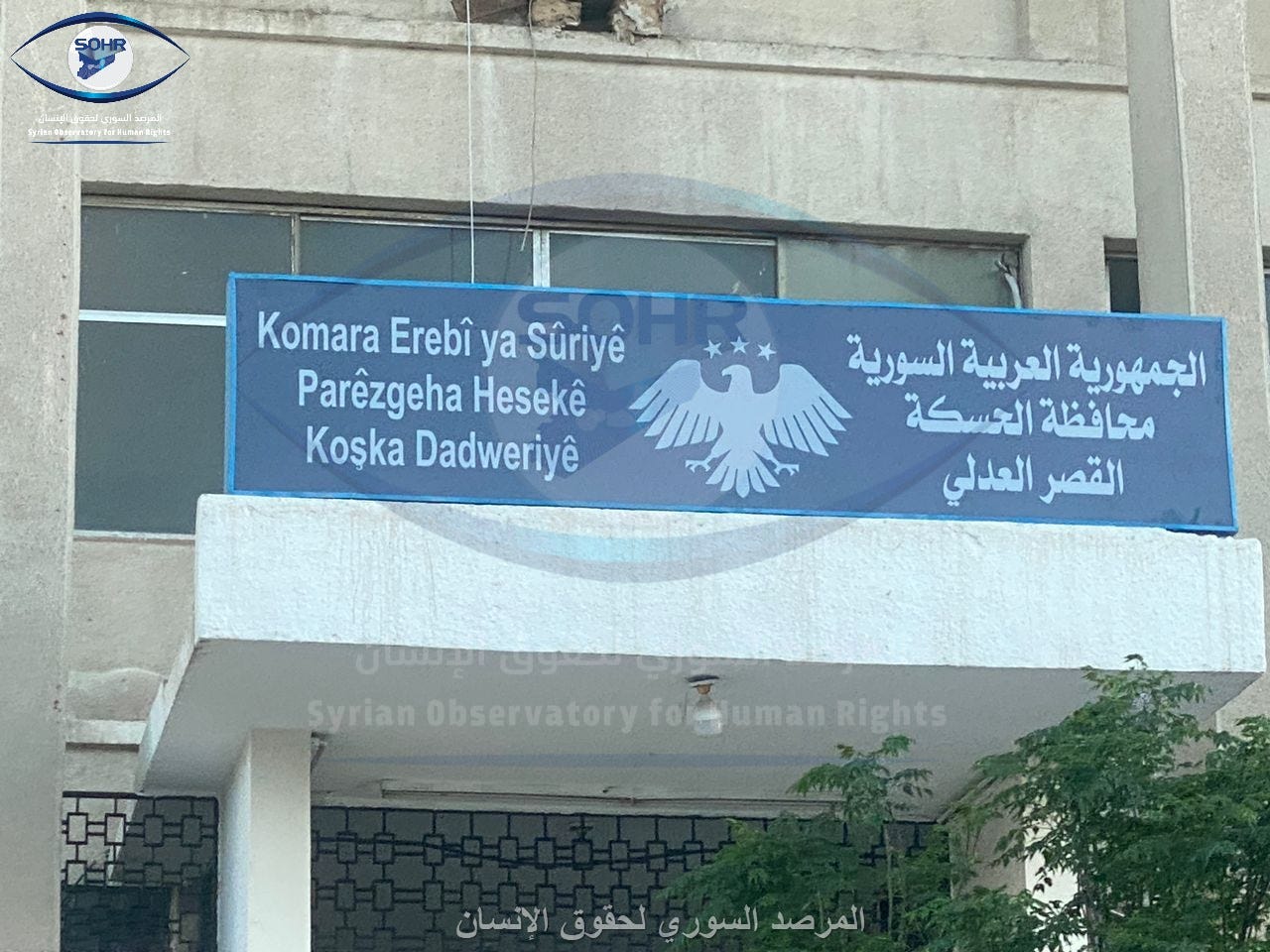
Following a series of subsequent meetings between the two sides and a reported agreement for the government to take over the facility the next day, the April sign was replaced on the evening of May 6th with a bilingual sign reading “The Judicial Palace.”
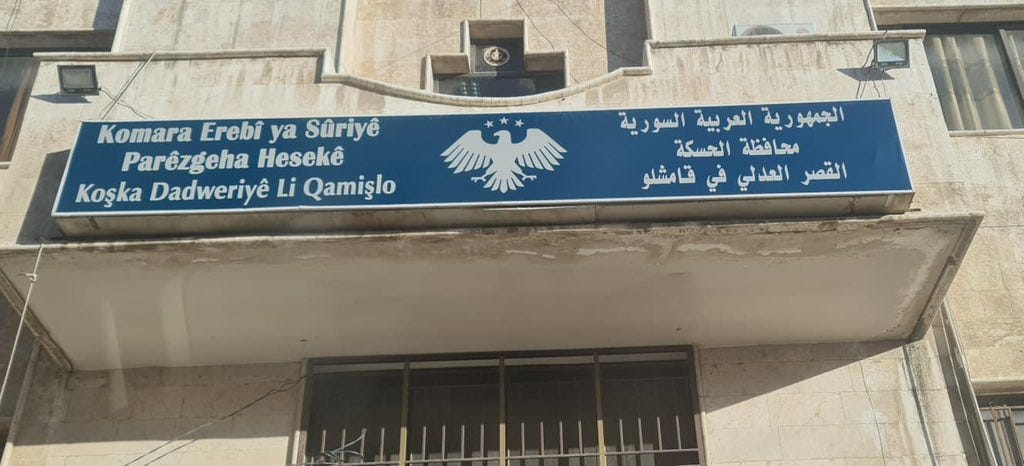
Around the same time a similar bilingual sign was installed at the courthouse in al-Qamishli, or Qamişlo in Kurdish, notably using the Kurdish name in the Arabic portion of the sign (قامشلو rather than القامشلي).
On the morning of May 7th a meeting featuring Gov. Ahmad, Dep. Gov. Ahmad al-Hilali, and Mustafa ‘Abdi of the Presidential team overseeing integration, was held at the al-Hasakah Governorate Building “in preparation for the reopening of the city's Justice Palace.” Around midday government employees removed the bilingual Arabic-Kurdish sign installed the day prior, and removed it with one written in Arabic and English.
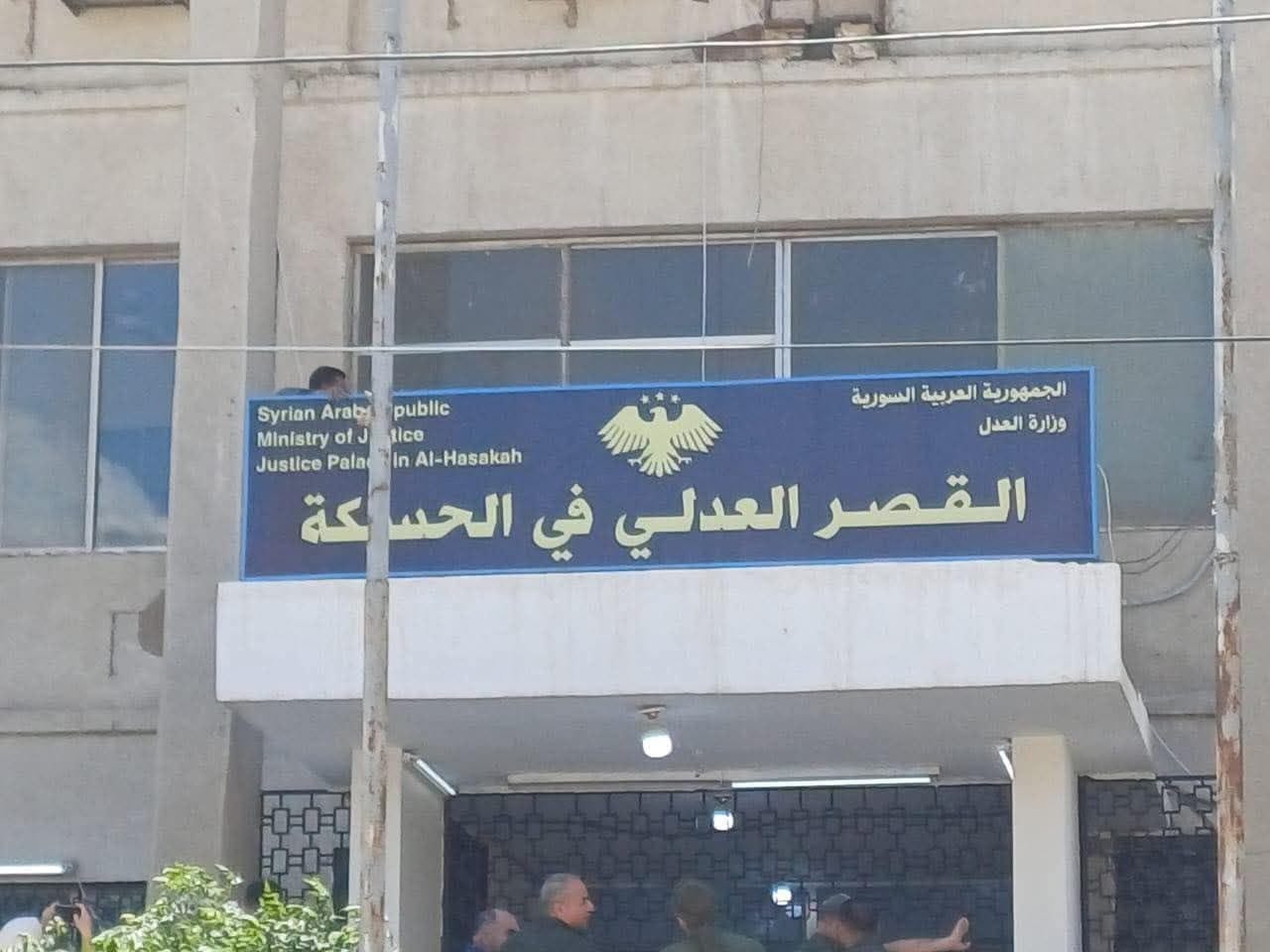
Almost immediately after, small groups of protestors gathered at both the al-Hasakah and al-Qamishli courthouses where they quickly bypassed the Asayish security present, tearing down the new al-Hasakah one, while crossing out the “Syrian Arab Republic” written on the sign put up in al-Qamishli the day prior. As per usual some alleged that these acts were carried out by members of the Revolutionary Youth Movement, though this is not confirmed.
Since then a new monolingual Arabic sign has been installed on the al-Hasakah Judicial Palace twice, both times ripped down by protestors. Prior to the second case the site was visited by Asayish commander and current deputy commander of the government’s Internal Security Forces in al-Hasakah Mehmûd Xelîl Elî along with Mustafa ‘Abdi of the Presidential team, seemingly in a failed attempt to deescalated the situation.
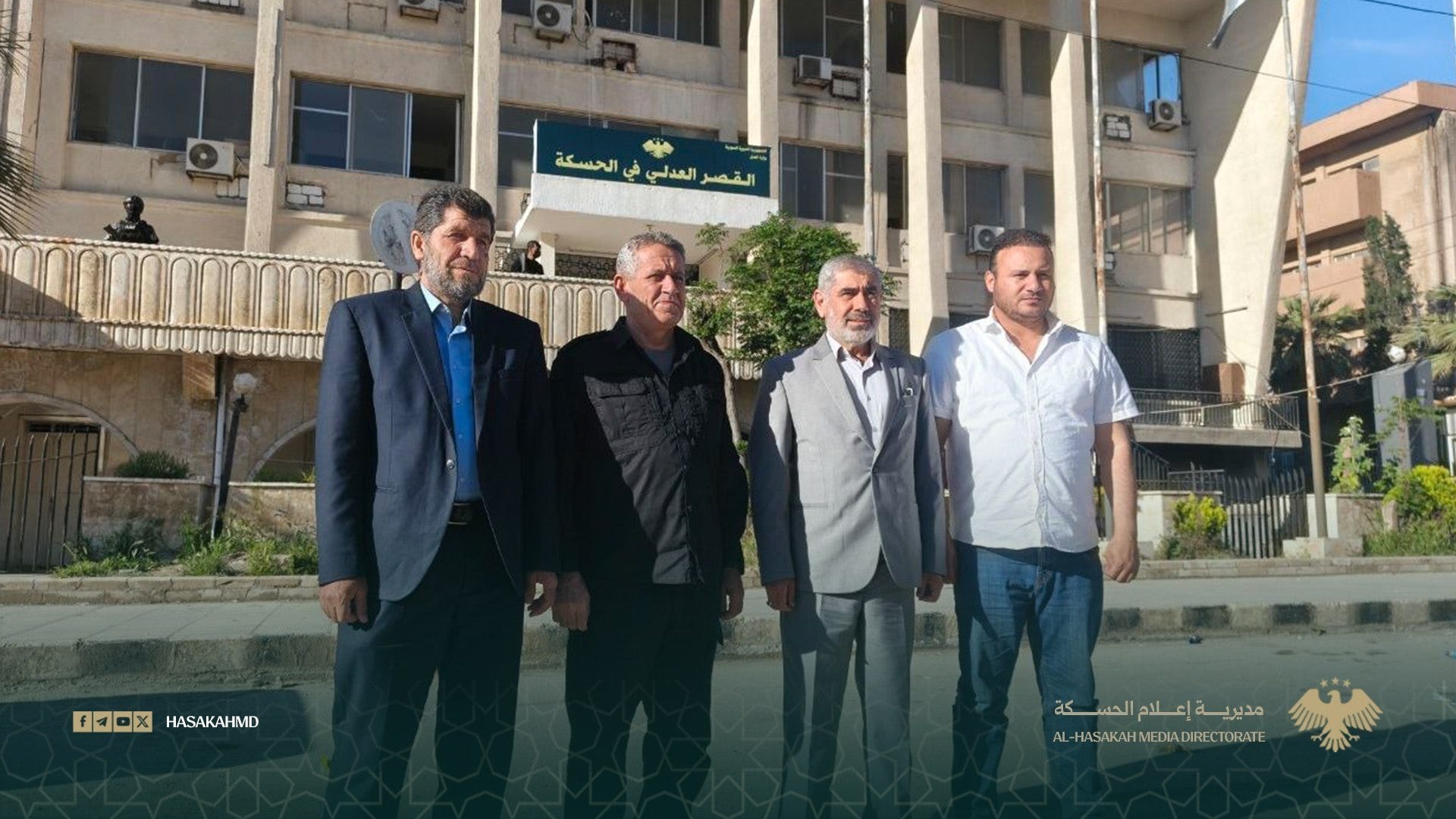
Various officials have made statements on the matter since March 7th. The Ministry of Justice condemned the tearing down of the signs as a “violation of public order, the prestige of the state, and the rule of law,” while announcing its intention to pursue those responsible.
Deputy Governor of al-Hasakah and former government spokesman for the integration process Ahmad al-Hilali published several statements on the incidents. The first on March 7th stated that “the Palace of Justice is a sovereign symbol of the state,” that officials withdrew from the area in order to deescalate, and that the government “appreciates the efforts of the movement in the SDF pushing for integration.” On the 8th al-Hilali addressed the content of the dispute, stating
The Kurdish language is a beautiful language, and is my mother tongue, and the language of the society in which I grew up and was raised. We are proud of it as we are proud of all the components of this governorate, rich in its diversity.
As for the misunderstanding about placing a sign on the Palace of Justice building in al-Hasakah that does not include the Kurdish language, it is important to clarify that the Palace of Justice represents an official institution that embodies justice and adherence to the laws in force in the Syrian state.
According to Decree No. 13, Kurdish is a national language and is permitted to be taught in public and private schools in areas where Kurds constitute a significant proportion of the population, as part of elective curricula or cultural and educational activities.
In contrast, Arabic is the only official language in the Syrian Arab Republic, according to the Constitution and applicable legislation, and its use is required in official institutions, education, legal documentation, and official transactions.
Protecting the Arabic language, and adopting it exclusively in official communications and transactions, is also considered part of state sovereignty and public order.
Therefore, these existing laws cannot be bypassed at the current stage in accordance with the Constitutional Declaration, except through future constitutional and legal amendments approved within the relevant legislative institutions, most notably the Syrian People’s Assembly, which is expected to convene soon.
The same day Governor Ahmad reportedly told Rudaw that “The writings in the Kurdish language on the signs will be written in Kurdish-majority areas.” On the 9th the government-run al-Hasakah Information Directorate published a statement by Ahmad reading:
• The acts of vandalism carried out by some youths, particularly those witnessed in the vicinity of the Justice Palace in al-Hasakah city, are unacceptable and do not serve the interests of society or reflect the values of the region's residents, who are known for their awareness and responsibility.
• Maintaining security and stability is a collective responsibility that falls on everyone.
• Public institutions and properties belong to all citizens, and attacking them only leads to increased tension, disruption of people's interests, and weakening of the social fabric.
• In this sensitive situation, we call on all citizens of our country, especially the youth, to demonstrate a spirit of national responsibility, prioritize the language of reason and dialogue, and refrain from anything that could exacerbate the situation or spread chaos.
The bilingual social media page linked to his office did not comment on the matter apart from a brief mention of ongoing “positive and constructive” talks on the matter, in a post regarding Damascus’ recent release of detained SDF members.
After re-examining the handful of signs that we’ve seen installed over the last three months it’s still hard to perceive a pattern. It seems quite possible that different actors (meaning both government and SDF-aligned) have installed them at different times and in different places, and representatives of different government institutions have responded in different ways.
On the government side it does not appear that there was a set policy from above, prior to the recent al-Hasakah incidents. Both the official Afrin and Kobani/‘Ain al-‘Arab District media accounts publish bilingually, in Arabic and Kurdish, and the latter recently highlighted the use of bilingual signs in Çelebî/al-Jalabiyah. Çelebî/al-Jalabiyah appears to be an outlier overall, in that it sits on the line between areas still controlled by the SDF and by the government, and was at one point captured by the Syrian military though DAANES institutions are still active inside it. Meanwhile signage installed in areas more firmly still under SDF control, for example the May 6th al-Qamishli Palace of Justice sign, was likely installed by individuals on the SDF side as a preemptive move.
With the story still developing it remains to be seen what institutional signage will look like post-integration. It’s possible that the government will backdown on this matter for now, in order for integration to continue proceeding without escalation. An example of such is the Kurdish citizenship enrollment process, in which after anger over stateless Kurds being registered as “Syrian Arab” the government directed those overseeing the process to just use the term “Syrian.” As the official name of the country is the “Syrian Arab Republic” and, according to legislation still on the books, the nationality is “Syrian Arab,” this measure simply postpones the more politically complicated matter at the heart of the issue. In such a scenario, allowing for bilingual signage hypothetically allows for the Ministry of Justice to take over the Judicial Palaces, while delaying the creation of some sort of actual bilingual policy for Syria’s Kurdish-populated areas.